



Description
We have all been there. You start a new fitness regime, and for the first few months, the results are fantastic. You feel stronger, your clothes fit better, and your energy is through the roof. Then, inevitably, progress stalls. You are doing the same workout, eating the same foods, but the scale won’t budge and your fitness levels seem frozen. This is known as a fitness plateau, and it is the body’s natural way of adapting to stress. Your body has become efficient at the exercises you are doing, so it burns fewer calories to perform them.
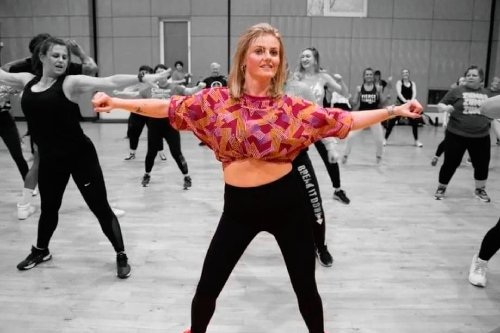
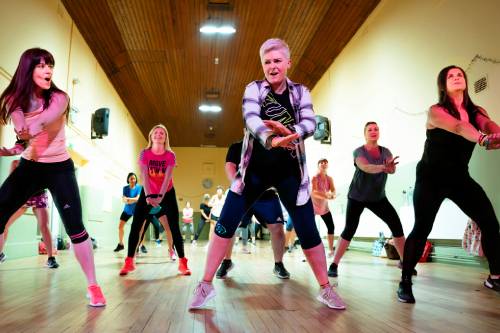
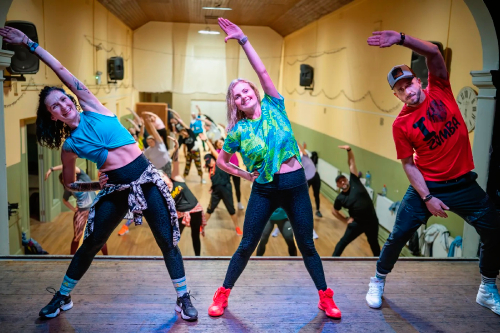
The solution is not necessarily to train harder, but to train differently. Muscle confusion—surprising your body with new movements—is key to breaking through a plateau. If you have been strictly lifting weights or running, your body has adapted to linear movement. This is where the search for Zumba Classes Near Me often begins. Introducing a workout that involves lateral (side-to-side) movement, rotation, and variable tempos forces your body to re-adapt, jumpstarting your metabolism and reigniting your progress.
The Power of Non-Linear Movement
Traditional cardio like running or cycling is linear; you move forward in a straight line. While excellent for the heart, this can lead to imbalances where certain muscles become dominant while others lie dormant. Dance fitness is multi-planar. You move forward, backward, sideways, and diagonally. You twist and turn. This 360-degree movement recruits stabiliser muscles that are often neglected in standard gym routines.
By engaging these underused muscle groups—particularly in the hips, core, and ankles—you increase the overall metabolic demand of the workout. Your body has to work harder to coordinate these complex patterns than it does to maintain a steady jogging pace. This “shock” to the system is often exactly what is needed to snap the body out of its comfort zone and trigger new improvements in tone and endurance.
Variable Heart Rate Training
Many people who hit a plateau are stuck in “steady-state” cardio. They maintain the same heart rate for 45 minutes. While this is healthy, the body becomes incredibly fuel-efficient at this specific intensity. To burn more fat and improve cardiovascular capacity, you need to vary your heart rate.
Dance fitness naturally incorporates interval spikes. One song might be a high-speed Merengue that pushes you into the anaerobic zone (breathless), followed by a slower Cumbia that brings you back to the aerobic zone. This constant fluctuation keeps your metabolism guessing. It creates an “afterburn” effect (EPOC), where your body continues to burn calories at a higher rate for hours after the class finishes as it works to return to homeostasis. This is far more effective for weight management than steady-state exercise.
Cognitive Engagement and Motor Skills
A physical plateau is often accompanied by a mental one. Boredom is the enemy of intensity. If you are mentally checking out during your workout, you likely aren’t pushing yourself as hard as you think. Dance requires cognitive engagement. You have to learn steps, follow cues, and stay on the beat.
This mental focus reconnects the mind to the muscle. When you are fully present, your movement quality improves. You squat deeper, reach further, and engage your core more effectively. The challenge of mastering a new routine releases dopamine, which renews your motivation. Suddenly, the workout feels fresh and exciting again, leading to better effort and, consequently, better results.
Core Strength and Posture
A common reason for stagnation in other sports is a weak core. You might be unable to run faster or lift heavier because your midsection cannot support the load. Dance fitness is, at its core, a core workout. Every hip isolation, every shimmy, and every balance step originates from the abdominals and lower back.
Unlike crunches which only work the abs in one direction, dance works the core functionally and dynamically. It strengthens the obliques and the deep transverse abdominals. Improving your core strength through dance will often have a carry-over effect on your other activities. You might find that after a few weeks of dancing, your running posture improves or your back pain during lifting disappears, allowing you to break through plateaus in those areas too.
Conclusion
If your current routine has stopped delivering results, don’t quit—switch it up. Adding a dynamic, multi-planar class to your weekly schedule challenges your body in new ways, forcing it to adapt and improve. It is the perfect joyful jolt to get your fitness journey moving again.
Call to Action
Break through your barriers and discover a new way to train. Find a local class today and challenge your body to move differently.
Visit: https://fitandjoy.ie/






Reviews
There are no reviews yet.